
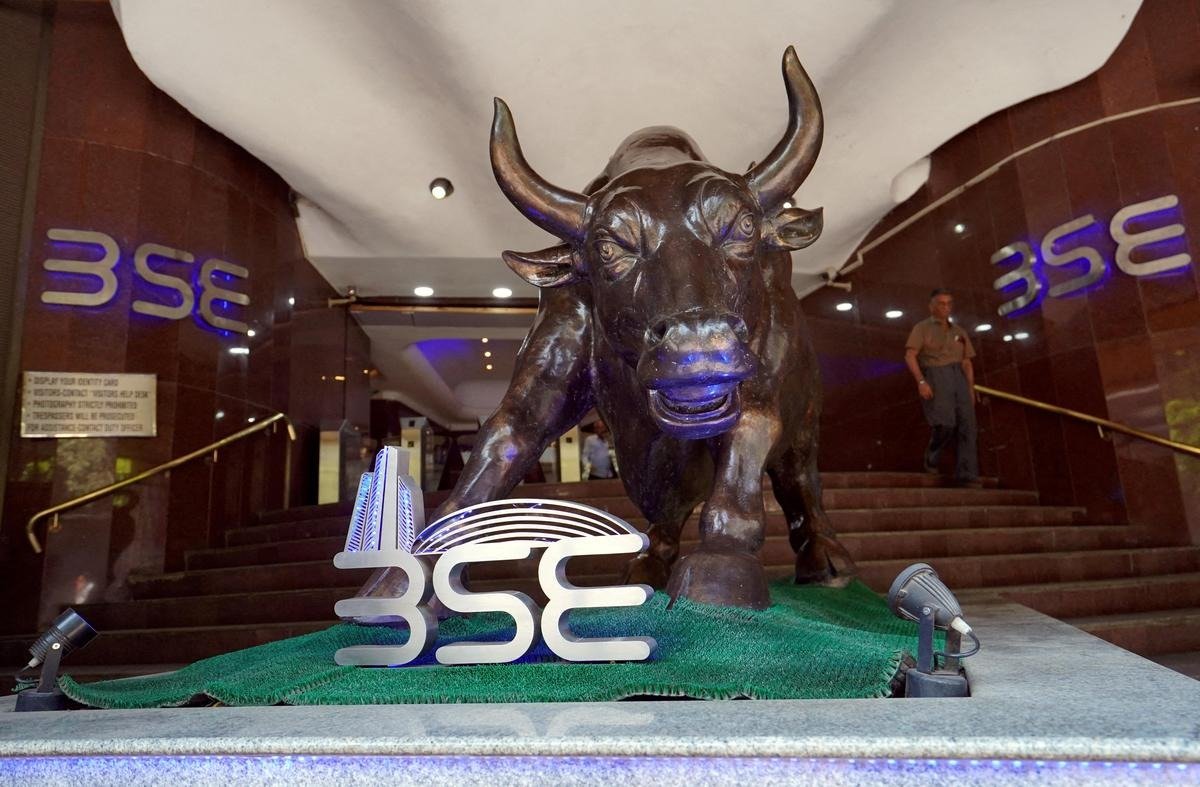
India’s benchmark equity indices ended Thursday’s trading session on a positive note, with the Sensex climbing nearly 274 points and the Nifty 50 closing comfortably above the crucial 24,300 level. The gains came despite a cautious trading environment, as investors closely monitored geopolitical developments in West Asia while selectively buying stocks from the automobile, oil & gas, and consumer durable sectors.
The BSE Sensex settled at 77,928.15, rising 273.55 points or 0.35 per cent, while the NSE Nifty 50 gained 66.95 points or 0.28 per cent to finish at 24,317.15. Although the benchmark indices ended in the green, broader market sentiment remained subdued, with mid-cap and small-cap stocks witnessing selling pressure throughout the session.
Market participants largely adopted a wait-and-watch approach amid uncertainty surrounding geopolitical tensions in West Asia. Analysts noted that investors preferred to remain cautious ahead of global developments, resulting in a range-bound trading session with modest gains in frontline indices.
Table of Contents
Sensex Ends Higher Despite Cautious Investor Sentiment
The Indian stock market witnessed a relatively muted trading session on Thursday, with benchmark indices oscillating within a narrow range before closing higher. The Sensex, comprising 30 of India’s largest and most actively traded companies, managed to maintain positive momentum due to buying interest in heavyweight automobile and industrial stocks.
The day’s movement reflected investors’ preference for quality large-cap stocks while avoiding aggressive risk-taking. Global uncertainty, particularly concerning the evolving geopolitical situation in West Asia, kept traders cautious throughout the day.
Despite these concerns, domestic institutional buying and resilience in select sectors helped the Sensex register another positive close.

Nifty Reclaims and Holds Above 24,300
The Nifty 50 ended the session at 24,317.15, successfully holding above the psychologically important 24,300 mark.
According to technical market experts, the index continues to face a significant resistance zone between 24,300 and 24,400.
Analysts believe that:
- A sustained move above 24,400 could strengthen bullish momentum.
- Breaking this resistance decisively may open the path towards 24,500–24,600.
- Fresh buying interest is expected only after the index confirms a breakout above this range.
On the downside, experts identified 24,200 as the immediate support level.
If selling pressure intensifies, 24,000 remains a major psychological support that investors will closely monitor.
The market’s ability to remain above these support levels will largely determine short-term sentiment.
Auto Stocks Provide Major Support to Sensex
One of the biggest contributors to Thursday’s gains was the automobile sector.
The Nifty Auto Index emerged among the strongest-performing sectoral indices, supported by healthy buying in leading automobile manufacturers.
Among the top gainers on the Nifty were:
- Mahindra & Mahindra
- Eicher Motors
- Coal India
Strong performances from Mahindra & Mahindra and Eicher Motors reflected continued optimism regarding India’s automobile sector, which has shown resilience amid improving rural demand, stable vehicle sales, and expectations of stronger festive season demand in the coming months.
Their gains significantly helped offset weakness in other sectors and kept benchmark indices in positive territory.
Oil & Gas and Consumer Durables Also Outperform
Besides automobiles, investors showed buying interest in several defensive and consumption-oriented sectors.
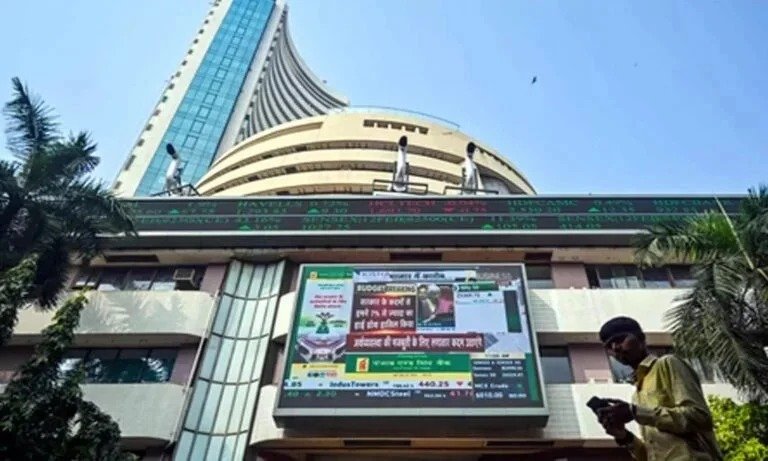
The following sectoral indices outperformed during the session:
Nifty Auto
Automobile stocks remained in focus due to strong investor confidence in long-term demand recovery and healthy earnings expectations.
Nifty Oil & Gas
Oil and gas companies attracted selective buying amid stable commodity prices and expectations of continued energy demand.
Nifty Consumer Durables
Consumer durable stocks also witnessed gains as investors remained optimistic about improving domestic consumption and the upcoming festive shopping season.
These sectors helped balance weakness seen elsewhere in the market.
Realty Stocks Lead Market Declines
While benchmark indices ended positively, several sectors faced selling pressure.
The Nifty Realty Index emerged as the worst-performing sector of the day, declining approximately 2 per cent.
Real estate companies witnessed profit booking after recent gains, while investors also remained cautious about interest rate expectations and broader economic uncertainties.
The decline in realty stocks weighed on overall market sentiment.
Chemical Stocks Underperform
The Nifty Chemical Index also ended lower and underperformed the broader market.
Chemical companies faced selling pressure amid cautious investor positioning and mixed global demand expectations.
Although no major sector-specific trigger emerged during the session, profit booking and weak market breadth contributed to losses.
Broader Markets Remain Under Pressure
Unlike benchmark indices, broader market performance remained relatively weak.
The:
- Nifty MidCap Index declined 0.35 per cent
- Nifty SmallCap Index fell 0.56 per cent
The divergence between large-cap stocks and broader markets suggests investors preferred safer, fundamentally strong companies amid ongoing uncertainty.
Market experts noted that institutional investors continue to favour established blue-chip companies over higher-risk mid-cap and Sensex small-cap stocks during periods of elevated geopolitical risk.
Geopolitical Concerns Keep Investors Cautious
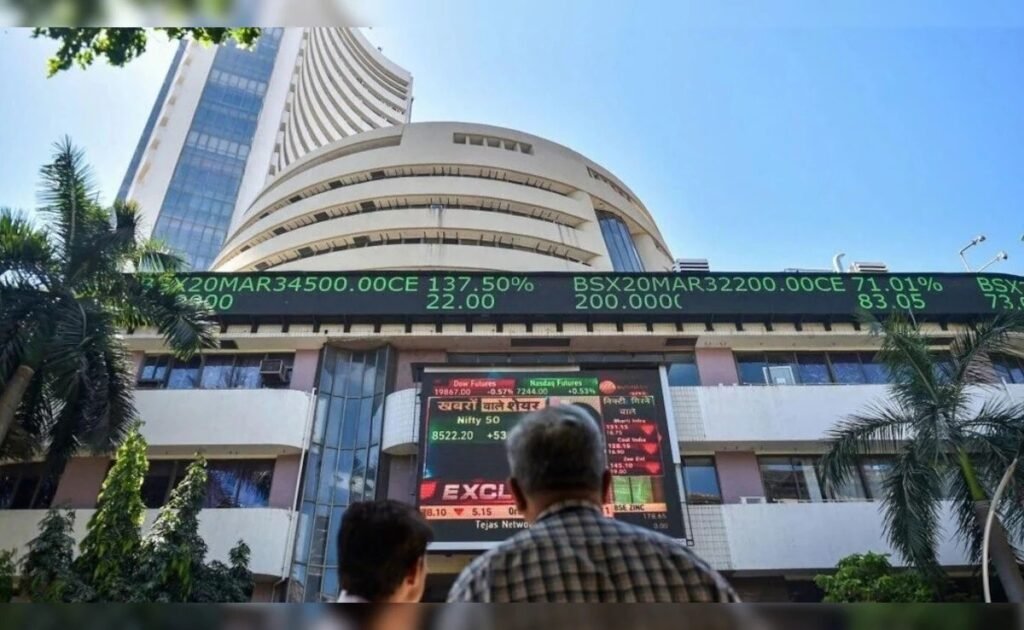
One of the primary reasons behind Thursday’s subdued trading activity was the evolving geopolitical situation in West Asia.
Global investors remained alert to developments in the region due to their potential impact on:
- Crude oil prices
- Global inflation
- Supply chains
- Currency markets
- Foreign investment flows
India, being one of the world’s largest crude oil importers, remains particularly sensitive to fluctuations in international energy prices.
Any escalation in geopolitical tensions could influence fuel costs, inflation expectations, and corporate profitability, making investors cautious in the near term.
As a result, traders largely avoided taking aggressive positions despite positive domestic fundamentals.
Technical Outlook: Key Levels Investors Should Watch
Technical analysts believe the market remains in a consolidation phase.
Immediate Resistance
The 24,300–24,400 range continues to act as the most important resistance zone for the Nifty.
A decisive breakout above this range could trigger fresh buying momentum and potentially push the index towards:
- 24,500
- 24,600
These levels represent the next major supply zone where profit booking may emerge.
Immediate Support
On the downside:
- 24,200 remains the first important support.
- 24,000 continues to serve as the major psychological support.
If these support levels hold, analysts expect the broader upward trend to remain intact.
Why Large-Cap Stocks Continue to Attract Investors
Recent market trends indicate investors are increasingly favouring large-cap companies due to their relatively stable earnings and stronger balance sheets.
Large-cap stocks generally offer:
- Better liquidity
- Lower volatility
- Strong institutional ownership
- Consistent earnings visibility
- Higher resilience during uncertain market conditions
As global uncertainty persists, portfolio managers are expected to continue allocating capital toward quality large-cap companies while remaining selective in Sensex broader market segments.
Domestic Fundamentals Continue to Support Markets
Despite global headwinds, India’s domestic economic fundamentals remain supportive for equities.
Several positive factors continue to underpin investor confidence:
- Stable economic growth
- Healthy corporate earnings
- Strong domestic consumption
- Continued government infrastructure spending
- Rising retail investor participation
- Robust banking sector performance
These structural strengths have helped Indian markets outperform many global peers over recent years.
Although short-term volatility may persist due to geopolitical events and global macroeconomic developments, analysts remain optimistic about Sensex India’s long-term growth story.
Investors Expected to Monitor Global Developments
Going forward, market participants are expected to closely track several key global and domestic factors, including:
- Geopolitical developments in West Asia
- Global crude oil price movements
- Foreign institutional investor (FII) activity
- Corporate earnings announcements
- Inflation trends
- Central bank policy signals
- Global equity market performance
Any significant developments in these areas could influence market direction in the coming trading sessions.
The Sensex extended its gains on Thursday, rising 273.55 points to close at 77,928.15, while the Nifty 50 ended above 24,300, supported primarily by strength in automobile, oil & gas, and consumer durable stocks. Although benchmark indices finished higher, the broader market remained under pressure as investors exercised caution amid geopolitical uncertainties in West Asia.
With the Nifty approaching a critical resistance zone around 24,300–24,400, market participants will closely watch whether the index can sustain momentum and break above this range. Sensex at the same time, support at 24,200 and the key psychological level of 24,000 will remain crucial for maintaining bullish sentiment.
As India’s macroeconomic fundamentals continue to remain strong, analysts believe long-term investor confidence is likely to stay intact. Sensex However, global developments, particularly geopolitical events and commodity price movements, are expected to remain the primary drivers of Sensex short-term market direction.