
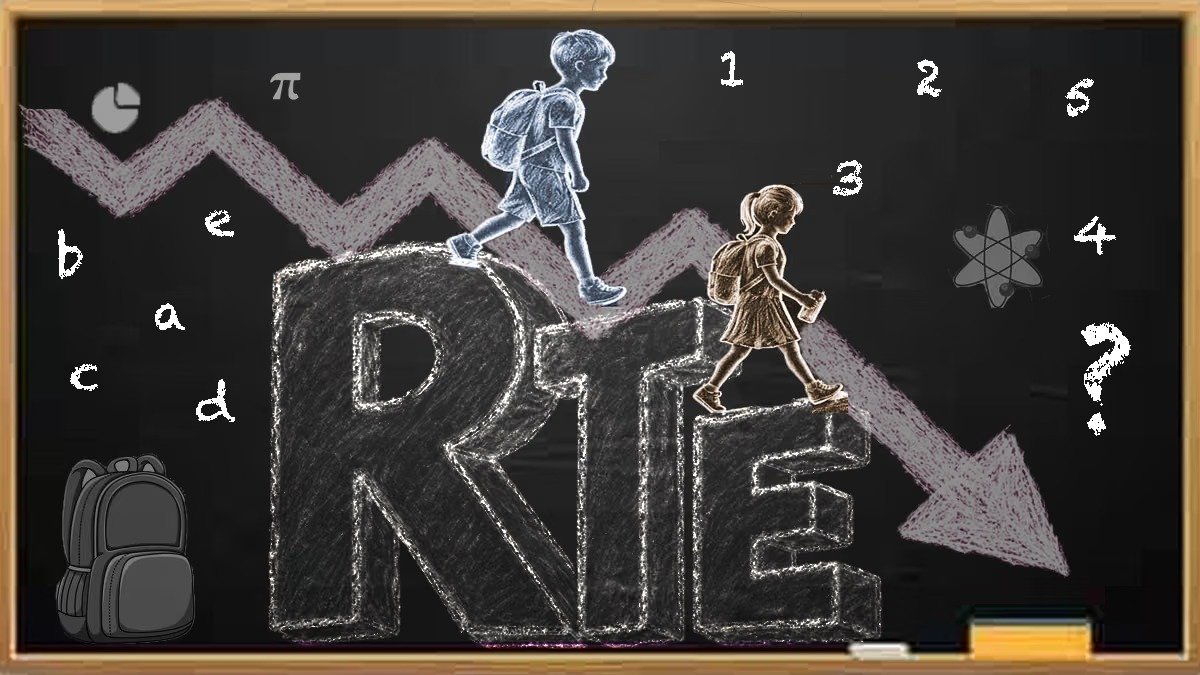
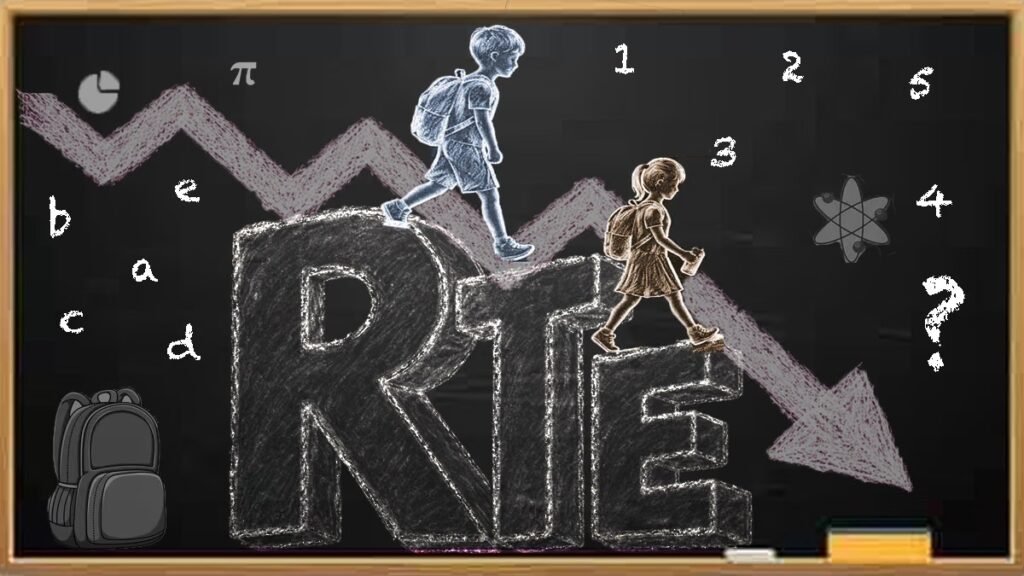
The Right of Children to Free and Compulsory Education (RTE) took centre stage before the Delhi High Court on Tuesday as the Court upheld the constitutional authority of the Election Commission of India (ECI) to requisition government school teachers for election-related duties while simultaneously emphasizing that such deployments must not compromise students’ right to uninterrupted education. The Court observed that although the Election Commission possesses broad constitutional powers under Article 324 of the Constitution, those powers must be exercised in harmony with the safeguards provided under the Right of Children to Free and Compulsory Education Act, 2009 (RTE Act).
Hearing a Public Interest Litigation (PIL) challenging the large-scale deployment of teachers as Booth Level Officers (BLOs) and enumeration staff for the ongoing Special Intensive Revision (SIR) of electoral rolls in Delhi, the High Court made it clear that teachers should not be subjected to “unbearable” stress after spending six to eight hours teaching in classrooms. The Bench stressed that educational responsibilities should remain the primary duty of teachers and that election assignments must be planned in a manner that preserves classroom instruction and safeguards children’s educational rights.
The observations have once again highlighted the delicate balance between conducting free and fair elections—a constitutional obligation—and ensuring compliance with the RTE Act, which guarantees every child access to quality elementary education without unnecessary disruptions.
Table of Contents
Delhi High Court Recognizes ECI’s Constitutional Authority
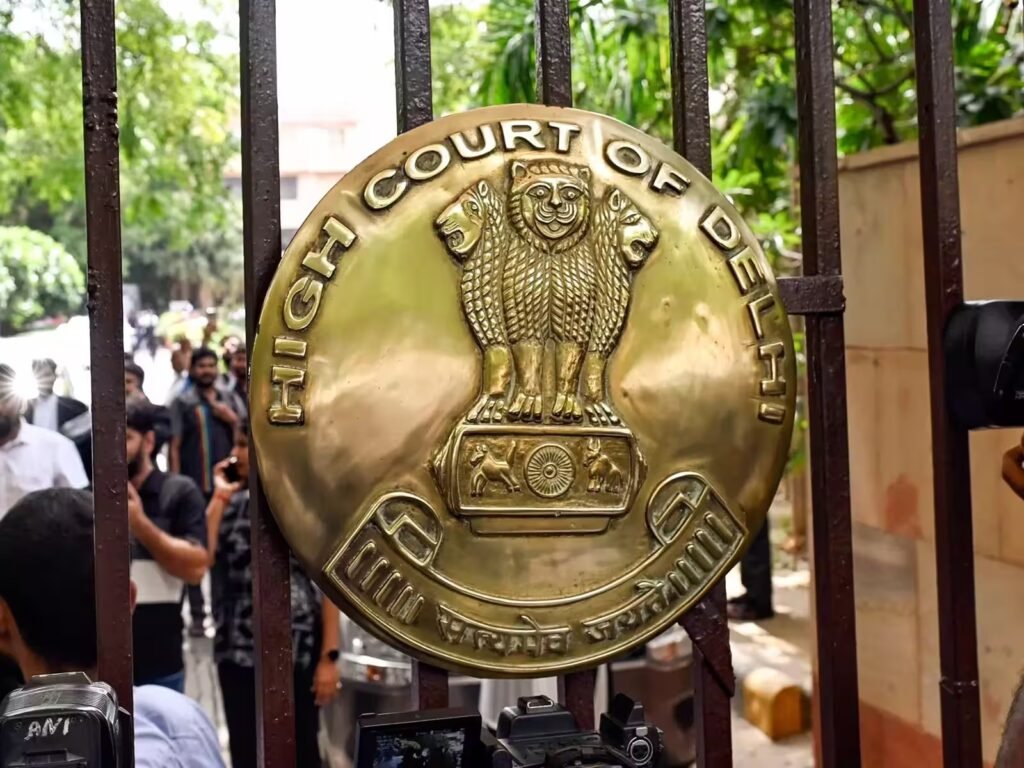
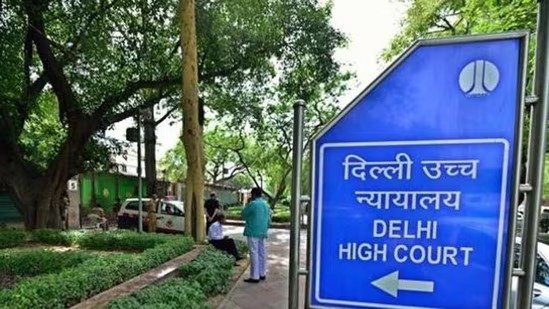
The matter came before a Division Bench comprising Chief Justice D.K. Upadhyaya and Justice Tushar Rao Gedela, who examined the legality of deploying government, municipal, and government-aided school teachers for election-related work.
At the outset, the Election Commission informed the Court that it had filed a detailed affidavit explaining its position. According to the Commission, teachers are not being assigned election duties during school hours, and the current deployment complies with the Supreme Court’s earlier ruling in Election Commission of India v. St. Mary’s School.
Taking note of this submission, the Court observed that there was no dispute regarding the Election Commission’s authority under Article 324 of the Constitution to requisition government employees, including teachers, for election-related functions.
However, the Bench clarified that this constitutional authority cannot override statutory protections available under the RTE Act, particularly provisions designed to protect classroom teaching and ensure uninterrupted education for students.
RTE Act Cannot Be Ignored, Court Observes
A significant aspect of the hearing revolved around Section 27 of the Right of Children to Free and Compulsory Education Act, 2009, which regulates the deployment of teachers for non-educational duties.
Section 27 generally prohibits assigning teachers to non-academic work except for limited purposes such as:
- Population census
- Disaster relief
- Elections to Parliament, State Legislatures, and local authorities
While election-related work falls within these permitted exceptions, the Court observed that authorities must still ensure that such deployment does not interfere with the primary objective of the RTE Act—providing quality education to children.
The Bench remarked that the statutory mandate of the RTE Act “cannot be lost sight of” while implementing election-related assignments.
According to the Court, protecting students’ educational rights remains equally important alongside ensuring the successful conduct of elections.
Teachers Should Not Face ‘Unbearable’ Stress
One of the Court’s strongest observations related to the physical and mental burden placed on teachers.
The Bench noted that teachers typically spend six to eight hours every day teaching students before being asked to perform additional election duties.
The judges observed that extending their working hours significantly could result in excessive stress, ultimately affecting both their well-being and classroom performance.
The Court therefore stated that the Election Commission is expected to remain mindful of the challenges faced by teachers while assigning election-related work.
It observed that authorities should take adequate measures to ensure that election duties do not impose an unbearable workload on teachers after school hours.
The judges further emphasized that the objective is not to curtail the Election Commission’s constitutional powers but to ensure that those powers are exercised humanely and responsibly.
ECI Says Teaching Hours Are Not Being Affected
During the proceedings, counsel appearing for the Election Commission defended the existing arrangements.
According to the Commission:
- Teachers perform Booth Level Officer duties only after school hours.
- Volunteers have also been deployed to share the workload.
- Every effort is being made to avoid disruption of regular classroom teaching.
- The ongoing Special Intensive Revision exercise is nearing completion.
The Commission maintained that its actions remain consistent with judicial directions issued by the Supreme Court and denied allegations that teachers are being diverted from classrooms during instructional hours.
The affidavit submitted before the Court also included data regarding the number of Booth Level Officers and volunteers deployed across Delhi.
Petitioners Dispute ECI’s Claims
The petitioners, represented by Advocates Rajesh Kumar Gogna and Ashok Agarwal, strongly disputed the Commission’s submissions.
They argued that the Election Commission’s claims were inconsistent with the ground reality.
According to the petitioners, only after the PIL was filed did authorities issue fresh circulars directing approximately 10,000 teachers to return to their schools.
They contended that this itself demonstrated that teachers had previously been deployed in violation of judicial guidelines.
The petitioners further alleged that many teachers had been receiving contradictory instructions from school principals and election authorities regarding whether they should attend school or perform election-related duties.
Such confusion, they argued, disrupted the normal functioning of government schools and adversely affected students.
Court Questions ECI Circulars
During the hearing, the High Court also examined certain circulars issued by election authorities.
One particular clause directed school principals not to initiate disciplinary action against teachers engaged in election work.
The Court questioned why such a clause was necessary if teachers were actually performing election duties only after school hours.
The Bench observed that if election work was being undertaken exclusively after school, there would ordinarily be no question of unauthorized absence from teaching duties.
This observation prompted the Court to seek further clarification regarding the implementation of the Commission’s instructions.
Five Additional Hours Raise Concerns
Another significant issue arose when the Election Commission informed the Court that teachers may spend approximately five additional hours after school performing Booth Level Officer duties.
The judges expressed concern over the cumulative workload.
They observed that a teacher who has already spent six to eight hours teaching should not routinely be expected to work for nearly eleven or more hours in a single day.
The Bench particularly referred to women teachers who often shoulder additional family responsibilities after working hours.
The Court remarked that authorities should “humanise” the implementation of election duties by recognizing the practical realities faced by teachers.
These observations reflected a broader concern regarding employee welfare while discharging constitutional responsibilities.
What the PIL Seeks
The Public Interest Litigation seeks several important directions from the Court.
Among its principal prayers are:
- Quashing orders that requisition more than 10 percent of regular teachers from any government, municipal, or government-aided school for election duties.
- Preventing teachers from being assigned election-related work during school hours.
- Directing authorities to utilize available non-teaching staff before deploying teachers.
- Ensuring classroom teaching remains uninterrupted throughout election-related exercises.
The petition argues that educational activities should not suffer because of administrative requirements associated with electoral processes.
Impact on Government School Students
According to the petitioners, large-scale deployment of teachers has significantly affected students studying in government schools.
They allege that some schools temporarily lost much of their regular teaching staff due to election assignments.
Meanwhile, private unaided schools reportedly continued functioning without similar disruptions.
The petition claims that this creates inequality between students attending government schools and those enrolled in private institutions.
Such disparity, according to the petitioners, violates the constitutional guarantees contained in:
- Article 14 (Right to Equality)
- Article 21 (Right to Life)
- Article 21A (Right to Education)
The petition argues that children belonging to economically weaker sections are disproportionately affected because they largely depend on government schools for quality education.
Background: Supreme Court’s St. Mary’s School Judgment
The petition relies heavily on the Supreme Court’s judgment in Election Commission of India v. St. Mary’s School, which laid down important principles governing the deployment of teachers for election work.
The judgment emphasized that teachers should ordinarily not be diverted from classroom teaching except where absolutely necessary and that educational activities should remain protected.
The petitioners contend that the present deployment practices violate both the spirit of the Supreme Court’s decision and the statutory protections contained in the RTE Act.
Representations Allegedly Ignored
The PIL further states that multiple representations were submitted before the Election Commission and other authorities.
These representations reportedly came from:
- The Vice and Principals’ Association of Delhi.
- The petitioners themselves.
According to the PIL, despite repeated requests for rationalizing teacher deployment, no meaningful corrective action was taken.
The petitioners therefore approached the High Court seeking judicial intervention.
Importance of RTE in Protecting Classroom Education
The Right of Children to Free and Compulsory Education Act, 2009, represents one of India’s most significant education reforms.
Enacted to implement Article 21A of the Constitution, the Act guarantees free and compulsory elementary education for children between six and fourteen years of age.
Apart from ensuring access to education, the legislation also seeks to maintain:
- Adequate teacher availability.
- Prescribed pupil-teacher ratios.
- Continuous classroom instruction.
- Quality educational standards.
Frequent diversion of teachers to administrative assignments can undermine these objectives by reducing classroom interaction and affecting students’ learning outcomes.
Educational experts have consistently argued that while elections are essential to democracy, prolonged teacher deployment should be minimized to preserve instructional quality.
Balancing Democratic Duties and Educational Rights
The case highlights two equally important constitutional objectives.
On one hand, India requires an efficient electoral machinery capable of conducting free and fair elections, for which government employees—including teachers—have traditionally played an important role.
On the other hand, the Constitution and the RTE Act impose a corresponding obligation upon the State to ensure uninterrupted education for children.
The Delhi High Court’s observations indicate that these two objectives are not mutually exclusive.
Instead, authorities are expected to strike a practical balance by ensuring election work is organized in a manner that neither compromises democratic processes nor weakens educational outcomes.
Next Hearing Scheduled for August 20
After considering the submissions made by both parties, the Delhi High Court granted liberty to the petitioners to file a rebuttal affidavit challenging the Election Commission’s factual assertions regarding teacher deployment.
The matter has now been listed for further hearing on August 20, when the Court is expected to examine the evidence placed on record by both sides.
The outcome of the case could have significant implications for future election management practices, particularly regarding the extent to which teachers may be deployed for electoral duties without affecting the rights guaranteed under the RTE Act.
The Delhi High Court’s observations reaffirm the Election Commission of India’s constitutional authority to deploy teachers for election-related work while underscoring that such powers must be exercised in harmony with the Right of Children to Free and Compulsory Education (RTE) Act, 2009. Stressing that teachers should not be subjected to excessive workloads or diverted in ways that disrupt classroom teaching, the Court highlighted the need to balance efficient election administration with the constitutional right to quality education. As the matter proceeds, the Court’s eventual decision is expected to shape future policies on teacher deployment, ensuring that democratic responsibilities are fulfilled without compromising students’ educational interests or the welfare of educators.