
Flipkart Prepares to Shake Up India’s Online Food Delivery Industry
India’s highly competitive online food delivery market could soon witness a major transformation as Flipkart prepares to enter the sector, setting the stage for fresh competition with established players such as Zomato and Swiggy. The e-commerce giant has confirmed that it plans to launch its food delivery service in the coming weeks, marking its entry into one of the country’s fastest-growing digital commerce segments.
The move reflects Flipkart’s broader strategy of expanding beyond traditional online shopping into multiple consumer-focused services. With millions of active users already shopping through its platform, the company aims to leverage its extensive customer base, logistics network, and technology infrastructure to establish a strong presence in food delivery.
Unlike an immediate nationwide rollout, Flipkart will begin by testing the service on a limited scale, gathering customer feedback, refining its offerings, and gradually expanding operations based on user response. Industry experts believe this cautious approach could help the company build a sustainable business model while avoiding some of the challenges faced by existing players in the food delivery ecosystem.
Table of Contents
Flipkart Confirms Food Delivery Launch
Flipkart Group Chief Executive Officer Kalyan Krishnamurthy confirmed that the company will begin testing its food delivery service within the next few weeks.
According to Krishnamurthy, Flipkart’s initial focus will be on understanding customer expectations rather than rapidly expanding across the country.
The company plans to introduce its service in selected markets where it will carefully evaluate customer feedback, identify areas for improvement, and fine-tune its overall value proposition before launching on a much larger scale.
This phased strategy is designed to ensure that the final product aligns with consumer preferences while maintaining service quality and operational efficiency.
Limited Rollout Before Nationwide Expansion
Instead of entering multiple cities simultaneously, Flipkart will initially operate the service on a limited scale.
The company believes that launching in selected locations will allow it to:
- Test customer demand.
- Evaluate delivery efficiency.
- Improve user experience.
- Strengthen restaurant partnerships.
- Optimise logistics operations.
- Refine pricing strategies.
Only after analysing consumer feedback and operational performance will Flipkart expand the service to additional cities.
This approach mirrors the strategy the company previously adopted while launching its quick-commerce platform, Flipkart Minutes, where operations were gradually scaled after successful testing.
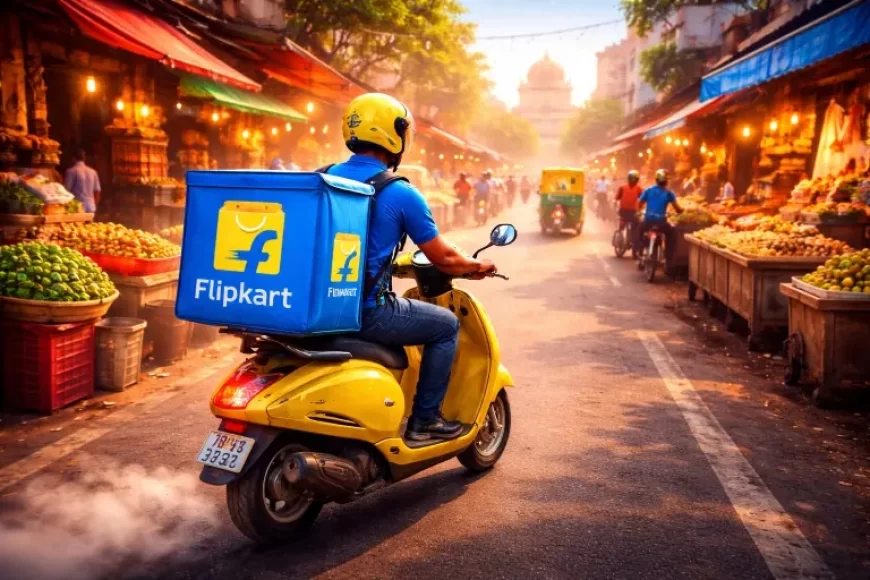
Food Delivery May Be Available Through Separate App and Flipkart Platform
According to company officials, the food delivery business will not remain confined to a standalone application.
Instead, customers are expected to access the service through both:
- A dedicated food delivery application.
- The existing Flipkart mobile application.
This dual-platform strategy could significantly increase customer reach by enabling existing Flipkart users to order food without downloading another application.
Although the company has not officially revealed the branding or launch city, industry observers believe further announcements could be made closer to the commercial rollout.
ONDC Integration Could Become a Key Differentiator
One of the most significant aspects of Flipkart’s upcoming food delivery service is its reported integration with the Open Network for Digital Commerce (ONDC).
Sources suggest that Flipkart intends to build its food delivery operations by leveraging the government-backed ONDC framework.
ONDC aims to create an open digital commerce ecosystem that enables buyers and sellers to interact across multiple platforms instead of remaining confined to a single marketplace.
By integrating with ONDC, Flipkart could potentially:
- Connect with a wider restaurant network.
- Offer greater consumer choice.
- Improve interoperability.
- Reduce platform dependency.
- Encourage competitive pricing.
Although Flipkart has not officially confirmed operational details regarding ONDC integration, industry analysts believe the network could play a significant role in the company’s long-term strategy.
India’s Online Food Delivery Market Continues to Grow
India’s food delivery industry has experienced remarkable growth over the past decade.
Factors driving expansion include:
- Rising smartphone usage.
- Affordable internet access.
- Urbanisation.
- Busy lifestyles.
- Growing preference for online ordering.
- Expansion of digital payment systems.
Millions of consumers now rely on food delivery platforms for daily meals, making the sector one of the country’s most valuable digital businesses.
Industry reports suggest that the market continues to grow despite increasing competition and changing consumer expectations.
Flipkart’s entry reflects confidence in the long-term potential of India’s online food delivery ecosystem.
Zomato and Swiggy Face Fresh Competition
For several years, Zomato and Swiggy have dominated India’s online food delivery market.
Both companies have invested heavily in:
- Restaurant partnerships.
- Delivery infrastructure.
- Technology.
- Customer loyalty programmes.
- Subscription services.
- Quick commerce expansion.
However, Flipkart’s entry introduces another major technology company with significant financial resources and an established nationwide customer base.
Although building market share will take time, analysts believe Flipkart’s existing logistics capabilities could help accelerate its expansion.
The increased competition may also encourage further innovation, improved customer service, and attractive pricing strategies across the industry.
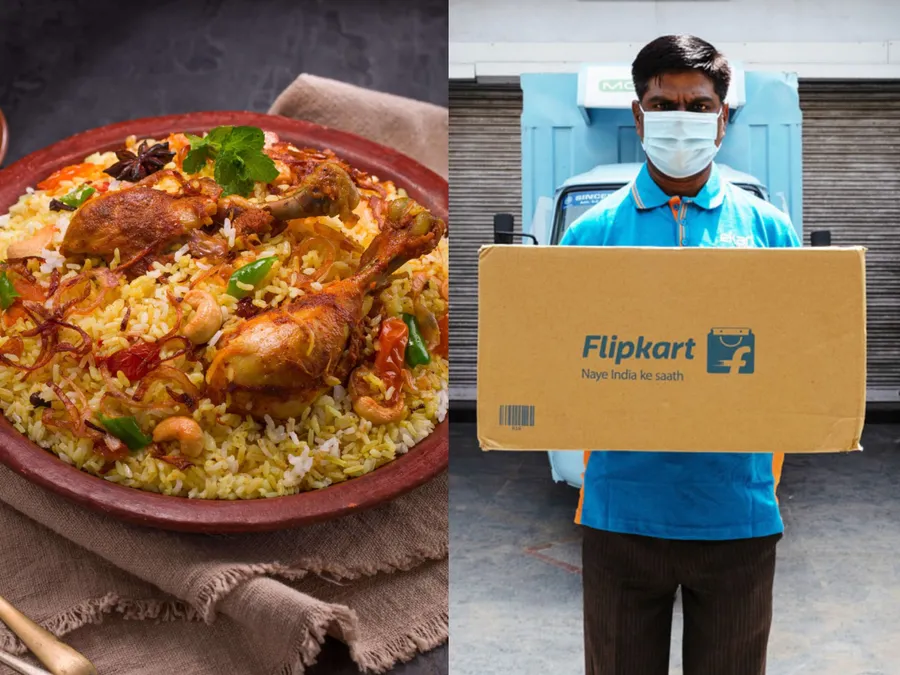
Customer Feedback Will Shape the Final Product
According to Flipkart’s leadership, customer feedback will remain central to the development of the new service.
Rather than immediately scaling operations, the company intends to continuously improve the platform based on user experiences.
Areas likely to receive attention include:
- Delivery speed.
- App performance.
- Restaurant availability.
- Pricing.
- Order tracking.
- Customer support.
- Overall user experience.
This customer-first approach reflects Flipkart’s strategy of refining services before large-scale deployment.
Competition in Food Delivery Is Becoming More Diverse
Flipkart is not the only company attempting to reshape India’s food delivery landscape.
Several new players have recently introduced alternative business models designed to challenge the existing market leaders.
These companies are exploring different strategies focused on affordability, lower commissions, and improved efficiency.
The increasing number of participants indicates that the market remains attractive despite intense competition.
Rapido Introduces Its Own Food Delivery Platform
Ride-hailing company Rapido recently entered the food delivery business with its own platform.
Rather than competing solely through discounts, Rapido has focused on creating a more affordable ecosystem for restaurants and customers.
Its strategy includes:
- Lower restaurant commissions.
- Competitive pricing.
- Wider logistics support.
- Attracting new online users.
According to company executives, reducing operational costs for restaurants could ultimately benefit customers through lower menu prices.
Changing Consumer Expectations Driving Innovation
Today’s food delivery customers expect more than just quick deliveries.
Consumers increasingly value:
- Transparent pricing.
- Lower delivery charges.
- Wider restaurant choices.
- Faster delivery times.
- Better customer service.
- Reliable order tracking.
- High-quality user experience.
As new companies enter the market, businesses are continuously adapting to meet these evolving expectations.
Competition is encouraging innovation across technology, logistics, pricing models, and customer engagement.
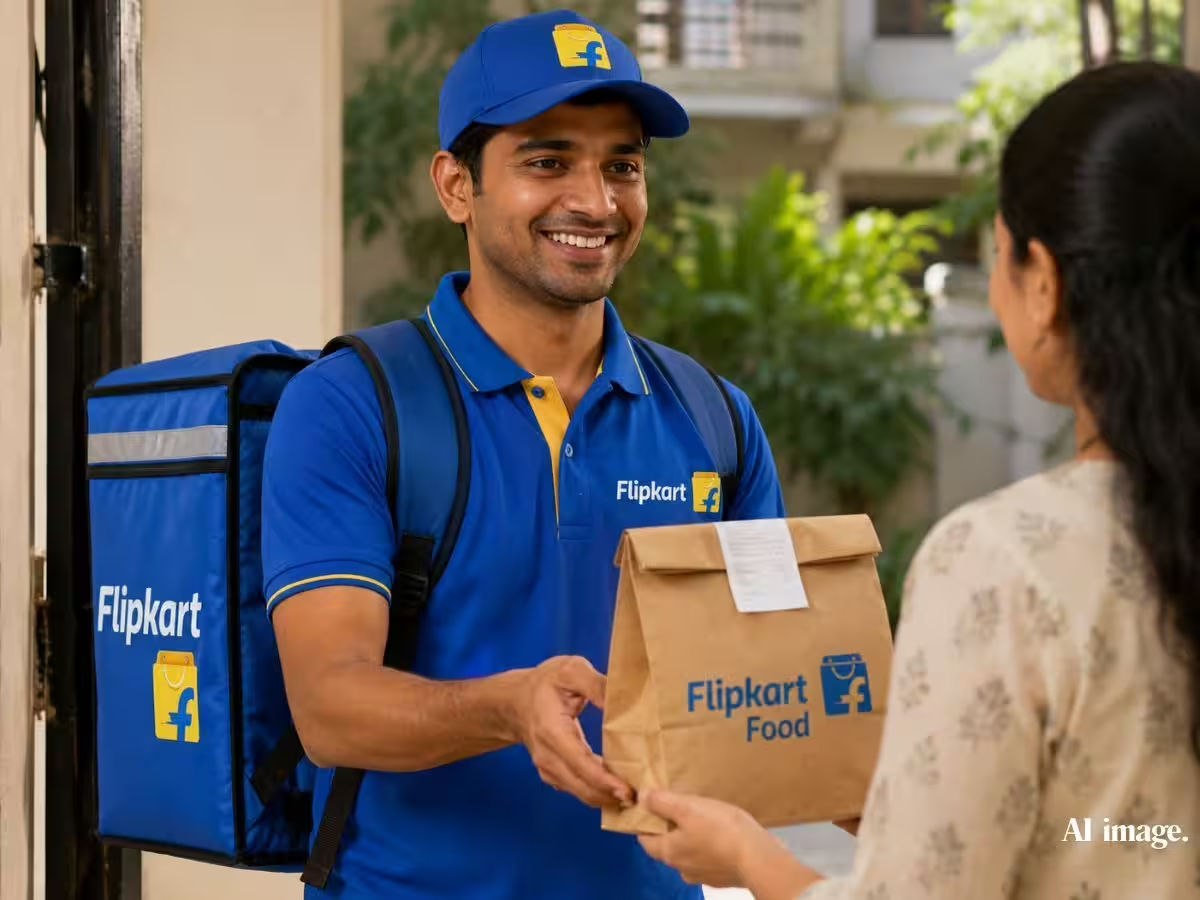
Value-Conscious Consumers Become Key Focus
Price sensitivity remains one of the defining characteristics of India’s online food delivery market.
Recognising this trend, companies are increasingly introducing services aimed at consumers seeking greater value.
Swiggy recently launched Toing, a platform designed to serve value-conscious food delivery customers.
Similarly, several emerging companies are attempting to differentiate themselves by reducing commissions, simplifying pricing structures, or introducing alternative ordering models.
Flipkart’s final pricing strategy will therefore play a crucial role in determining how effectively it competes with established platforms.
Leveraging Flipkart’s Existing Strengths
Flipkart enters the food delivery business with several advantages.
The company already possesses:
- A large nationwide customer base.
- Advanced logistics infrastructure.
- Strong technology capabilities.
- Digital payment integration.
- Brand recognition.
- Extensive seller ecosystem.
These strengths could help the company scale more efficiently compared to entirely new market entrants.
However, food delivery presents unique operational challenges, including real-time logistics, restaurant coordination, and maintaining delivery quality under tight timelines.
Successfully addressing these challenges will be essential for long-term growth.
Industry Experts Expect Stronger Competition Ahead
Market analysts believe Flipkart’s entry could significantly reshape India’s online food delivery landscape.
Greater competition may encourage:
- Better pricing.
- Improved customer experience.
- Increased restaurant participation.
- Faster technological innovation.
- Expansion into underserved markets.
Restaurants may also benefit from additional platform choices, potentially reducing dependence on a limited number of large aggregators.
Consumers, meanwhile, could gain access to more competitive offers and improved service standards.
Flipkart’s planned entry into India’s online food delivery market marks a significant development in the country’s rapidly evolving digital commerce ecosystem. By combining its extensive customer base, logistics capabilities, and technology infrastructure with a phased rollout strategy, the company aims to establish itself as a serious competitor to industry leaders Zomato and Swiggy.
The expected integration with the Open Network for Digital Commerce (ONDC), combined with a customer-first approach and gradual expansion strategy, reflects Flipkart’s intention to build a sustainable and scalable food delivery business rather than pursuing rapid growth alone.
As competition intensifies with the arrival of new players such as Flipkart and Rapido, India’s online food delivery market is likely to witness greater innovation, improved customer experiences, and more competitive pricing. While Zomato and Swiggy continue to dominate the industry, Flipkart’s entry has the potential to redefine the competitive landscape and offer consumers and restaurant partners additional choices in the years ahead.