
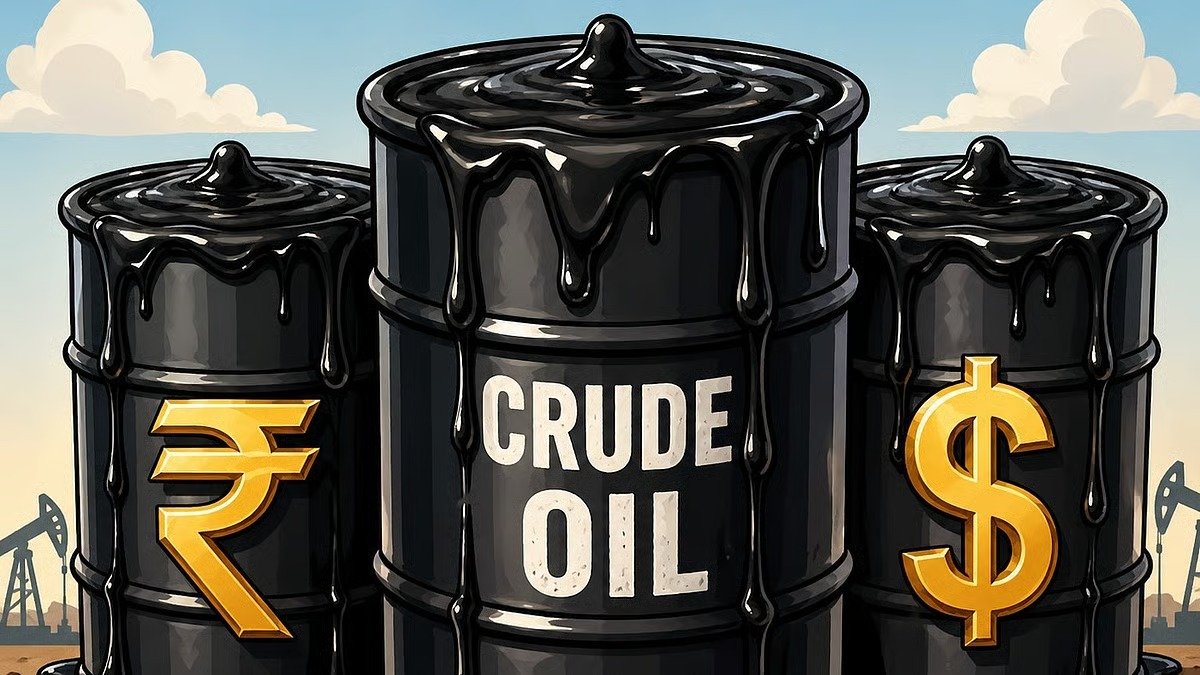
crude oil prices weighed heavily on Indian stock markets on Monday as investors reacted to rising geopolitical tensions in the Middle East and weakening global market sentiment. Domestic benchmark indices opened sharply lower after international oil rates climbed significantly, raising fresh concerns about inflation, corporate earnings, and India’s import bill.
The BSE Sensex dropped more than 500 points during early trade, touching an intraday low of 77,591, while the NSE Nifty slipped 144 points to 24,190.05. The decline reflected growing investor caution as higher energy costs and global uncertainty overshadowed otherwise strong domestic economic fundamentals.
The sharp rise in crude oil prices has once again brought attention to one of the biggest external risks for the Indian economy. Since India imports nearly 85 percent of its crude oil requirements, any sustained increase in global oil prices directly affects fuel costs, inflation, government finances, and the profitability of several industries.
Table of Contents
Why Markets Opened Lower
Indian equities mirrored weakness across major global markets after geopolitical tensions intensified over the weekend. Fresh military developments involving the United States and Iran increased fears that the conflict could affect oil-producing regions and disrupt global energy supplies.
Investors typically become more cautious during such periods because uncertainty often leads to higher volatility in financial markets. As crude oil prices moved sharply higher, market participants anticipated increased pressure on businesses that rely heavily on fuel and transportation.
Financial stocks experienced the biggest selling pressure. Banking shares, particularly private sector lenders, dragged the broader indices lower as investors reduced exposure to sectors that could be affected by rising borrowing costs and slower economic activity if inflation accelerates.
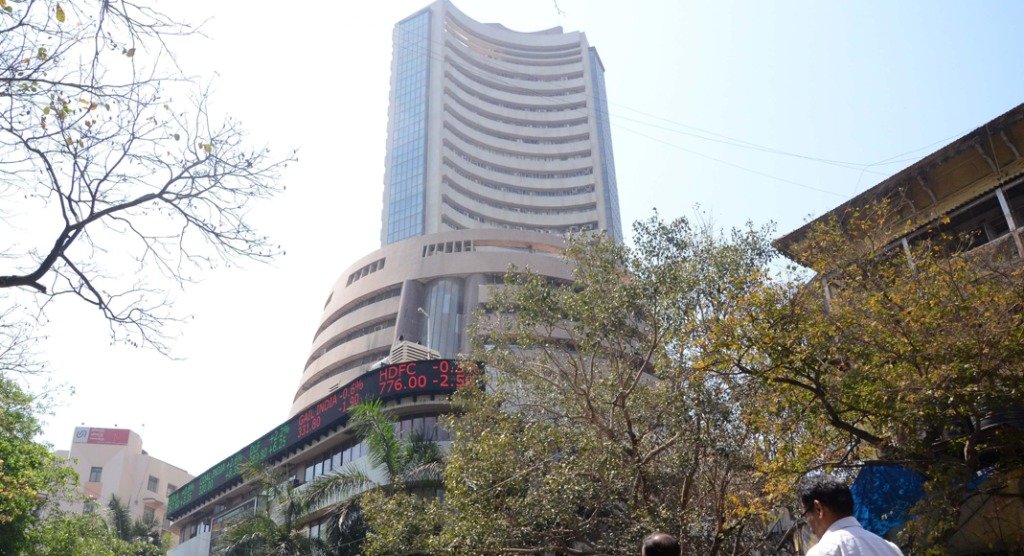
Banking and Realty Stocks Face Selling Pressure
Among sectoral indices, the Nifty Private Bank Index fell more than 2 percent during early trading. Several leading banking stocks came under pressure as investors booked profits and shifted towards relatively defensive sectors.
Major private banks including HDFC Bank, Axis Bank and Kotak Mahindra Bank were among the biggest losers in the opening session. Financial companies often face pressure when higher crude oil prices increase inflation risks because central banks may maintain tighter monetary policies for longer periods.
The Nifty Realty Index also declined by more than 1 percent. Real estate companies are particularly sensitive to interest rate expectations since higher borrowing costs can reduce demand for home loans and commercial property investments.
Travel-related stocks also remained under pressure as rising fuel costs can significantly increase operating expenses for airlines and transport companies.
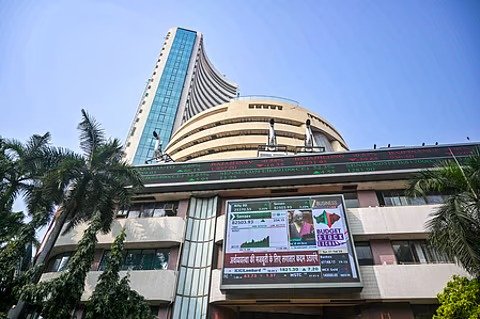
Defensive Sectors Offer Some Stability
While several sectors witnessed selling pressure, investors showed renewed interest in industries that generally perform better during periods of economic uncertainty.
The Nifty PSU Bank Index managed to trade higher, supported by selective buying in public sector lenders. Meanwhile, pharmaceutical and healthcare companies attracted investors looking for relatively stable businesses that are less affected by fluctuations in fuel prices.
Metal and oil & gas stocks also traded in positive territory. Energy companies often benefit from higher crude oil prices, particularly firms involved in exploration and production activities, as increased oil rates can improve revenue and profitability.
Healthcare and pharmaceutical companies are commonly viewed as defensive investments because demand for medicines and medical services usually remains stable regardless of broader economic conditions.
Why Crude Oil Prices Are Rising
The primary reason behind the latest rally in crude oil prices is the escalating conflict in the Middle East, a region responsible for supplying a significant share of the world’s petroleum.
International benchmark Brent crude climbed nearly 3 percent, approaching the important $90 per barrel level. US benchmark West Texas Intermediate (WTI) also gained more than 3 percent, trading above $85 per barrel.
The latest escalation has increased fears that oil exports from the region could face disruptions. Investors are particularly concerned about shipping routes that carry millions of barrels of crude every day. Any interruption in these supply chains can quickly reduce available global supplies, causing crude oil prices to rise further.
Energy markets are extremely sensitive to geopolitical developments because even the possibility of supply disruptions often pushes traders to increase buying, leading to higher prices.

Why Crude Oil Prices Matter So Much for India
For India, movements in crude oil prices have far-reaching economic consequences because the country depends heavily on imported crude to meet its energy needs.
When international oil becomes more expensive, the country’s import bill increases substantially. This can widen the current account deficit and put pressure on the Indian rupee.
Higher crude oil prices also influence inflation. Transportation costs increase as diesel and petrol become more expensive. Businesses then pass these additional costs to consumers through higher prices for goods and services.
Industries such as aviation, logistics, manufacturing, chemicals, paints, plastics and cement often experience rising production costs during periods of elevated crude oil prices.
Consumers may also feel the impact through higher fuel expenses and increased prices for everyday products transported across the country.
Technical Outlook Remains Positive
Despite Monday’s weak opening, market experts believe the broader technical structure of Indian equities remains relatively strong.
According to analysts, every meaningful decline continues to attract buying interest from long-term investors. This suggests that confidence in India’s economic growth story remains intact despite short-term global challenges.
Market specialists have identified the 24,100 level on the Nifty as an important support zone. If the index remains above this level, investors may continue to see buying opportunities during market corrections.
On the upside, the 24,500 level is expected to act as immediate resistance. A decisive move above this mark could improve overall market sentiment once global uncertainties ease.
Derivatives positioning also indicates that institutional investors continue to maintain a cautiously optimistic outlook rather than expecting a prolonged market decline.
Global Markets Show Mixed Performance
Asian markets reflected varying investor reactions to the latest geopolitical developments.
Japan’s Nikkei index and South Korea’s Kospi each declined by more than 4 percent, making them among the weakest performers in the region. These export-driven economies are particularly sensitive to global economic uncertainty and energy price fluctuations.
However, not all Asian markets followed the same trend. Hong Kong’s Hang Seng Index gained around 2 percent, while China’s Shanghai Composite and Indonesia’s Jakarta Composite also recorded gains of up to 1 percent.
The mixed performance indicates that investors are carefully assessing regional economic conditions alongside broader global risks.
What Investors Are Watching Next
The direction of crude oil prices will remain one of the most important factors influencing financial markets in the coming days.
Investors will closely monitor whether geopolitical tensions continue to escalate or whether diplomatic efforts help ease concerns. Any indication of disruptions to global oil supplies could keep crude oil prices elevated for a longer period.
Market participants will also watch inflation trends, central bank commentary, foreign institutional investment flows and corporate earnings for further clues about the market’s direction.
Although short-term volatility is expected to remain high, many analysts believe India’s strong domestic demand, improving infrastructure spending and resilient corporate balance sheets provide a solid foundation for long-term growth. However, if crude oil prices continue their upward trajectory, they are likely to remain a key risk factor for both the Indian economy and the stock market in the weeks ahead.